Ancient Art Conservation and Restoration

Our approach to restoration of antiquities is fundamentally conservational. It is possible to decrease the value of ancient art by going too far, making it too “perfect.”

Ancient art is almost always marked by its age, and in many cases the signs of age are an aesthetic asset. For instance, a smooth green patina is a beautiful signature of the antiquity of a Roman or Greek bronze. No one expects to see a polished bronze surface or even the bare metal itself. Conservationally, however, one must be sure that such a patina is stable, not continuing to corrode, as in the case of bronze disease which can aggressively reduce a bronze object to powder. Signs of bronze disease can be recognized, and it can be carefully and completely treated in many cases.


Antique Glass Vase Repair

Broken Glass Vase Antique Glass Vase Repair
  BEFORE   AFTER
(click for larger image)
 
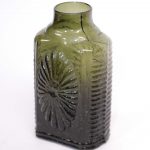
  This is a 2nd-century Roman glass vase about 7 inches tall. The glass is eggshell thin. We used a specialized non-yellowing optical epoxy to re-adhere the pieces and also to fill in missing areas. The epoxy has a unique optical similarity to most glass, so that cracks almost disappear.  

Another mark of antiquity is the beautiful rainbow iridescence that occurs on the surface of many pieces of ancient glass. These layers are not original, but develop over centuries. They are chemically and structurally the same as opal, and are a beautiful and a reliable sign of the age of the piece. When ancient glass is broken or incomplete, it can be a great challenge to restore, because of the fragility of this iridescence, and because of extreme thinness of the glass itself. The careful use of optical epoxy can produce astonishing, near invisible, results without going beyond good conservational practice.

Incompleteness itself can be taken as a mark of age. Often a beautiful fragment of ancient ceramic art is displayed, such as a graceful hand or a head. Yet there may be cracks and discolorations that disfigure to the extent that they take attention away from the artistic statement being made. The effect of removing or carefully disguising such blemishes is to reveal the artistic intent of the piece, as if for the first time.


Restoration of Ancient Ceramic Art

Ancient Greek Art Ancient Greek Art
  BEFORE
(click for larger image)
  AFTER
(click for larger image)
 
  This classical Greek Krater (circa 500 BC, approx. 14 inches tall) came to us in more than 50 pieces. When working with ancient ceramic art such as this, our approach is similar to that which a museum would take. We piece the object together with weaker, more easily reversible adhesives, and we don't make invisible repairs: rather we fill the chips and missing areas and inpaint only. "Inpainting" is a technique used in conservation where any painting-to-match covers only new filling and not original material. This looks good, as you can see, although lines can be seen on close inspection. The piece is fine for display, though not strong enough for household use.  

The concerns and possibilities of ancient art are too numerous to list, but we are happy to discuss them with you. It is possible to do such a fine job of sculpting or inpainting missing pieces that the damage becomes visually unimportant. Conservation must be technical and careful, while the artist must be ever-present, aware of the emotional impact of the entire piece.


Egyptian Bronze Falcon

Ancient Bronze Statue Ancient Bronze Statue Repair
  BEFORE   AFTER
 
  Cloth remnants of a mummified bird were found within this 8th-century B.C. Egyption bronze falcon. The tail was reattached and the crack was filled and inpainted. Careful clamping and a strong adhesive were required because the metal had split and warped. A walnut stand was made with a strong slant to keep the 9-inch bird's tail off the ground, which had caused the original break.  
 

Objects We Restore | Glass & Crystal Repair | Porcelain & China Repair | Asian Art Objects |
Sculpture Restoration | Ancient Art Objects | Antique Restoration | Recent Projects |
About Us | Contact Us | Home