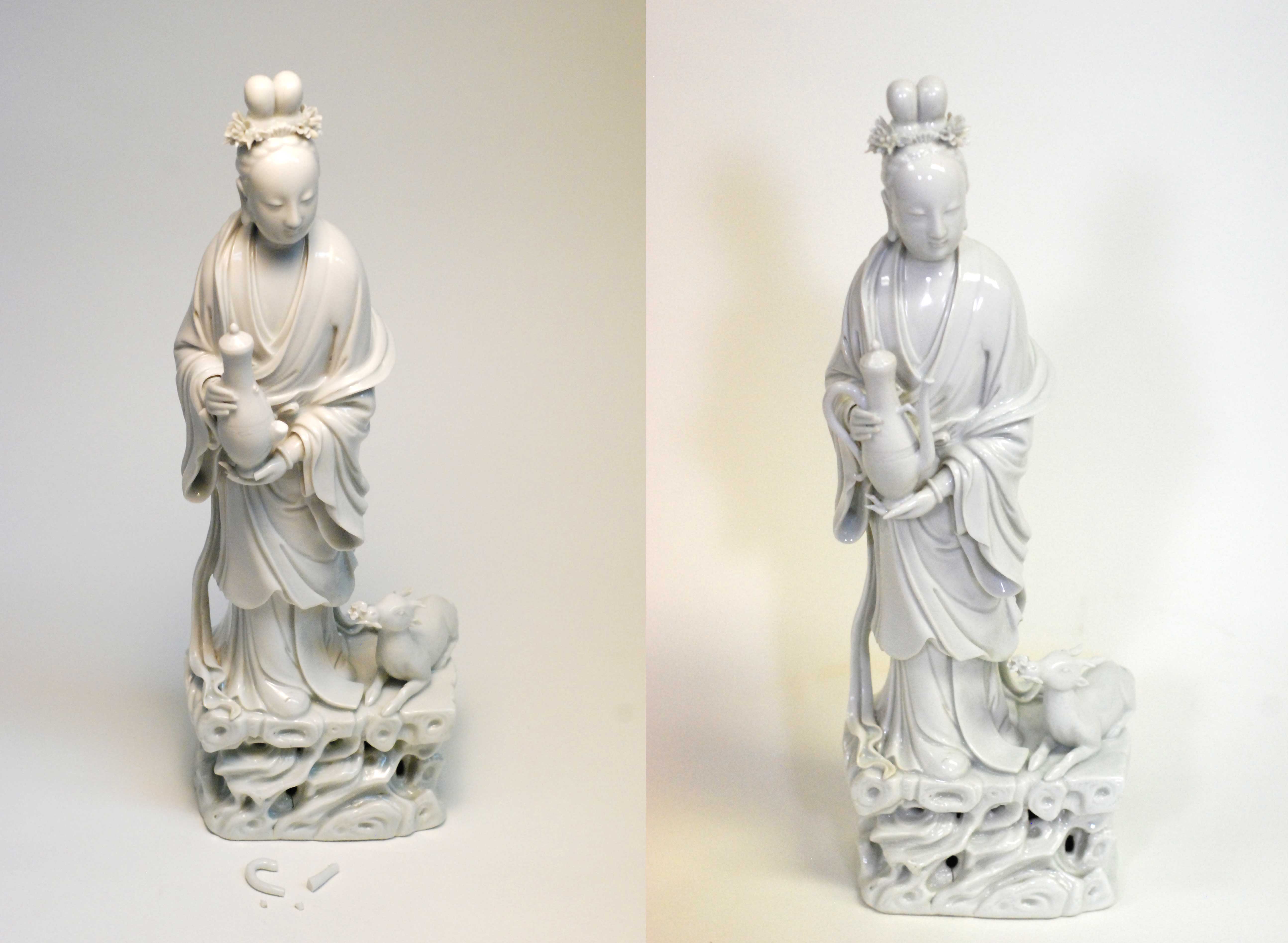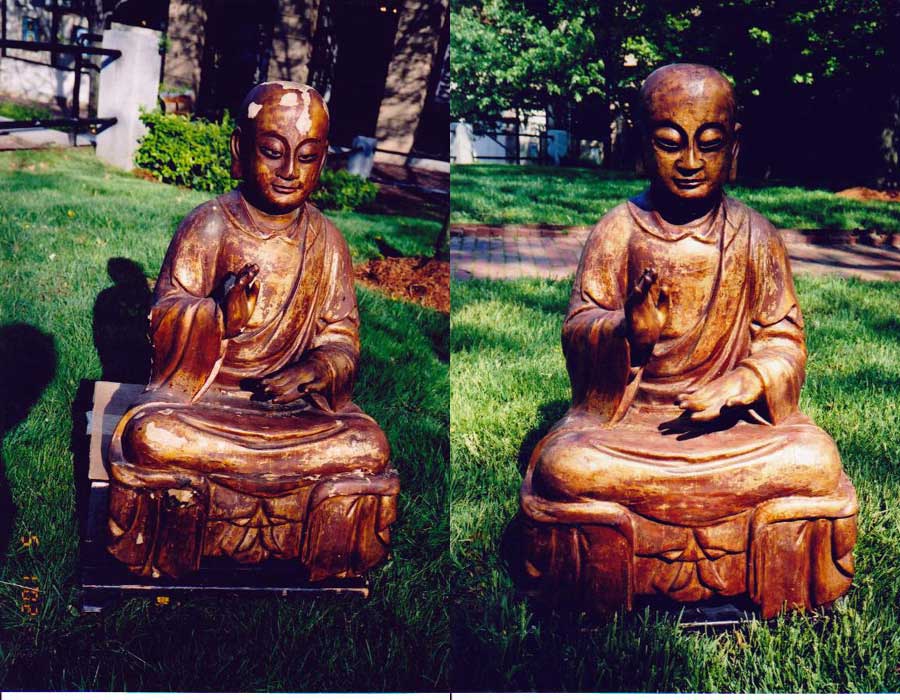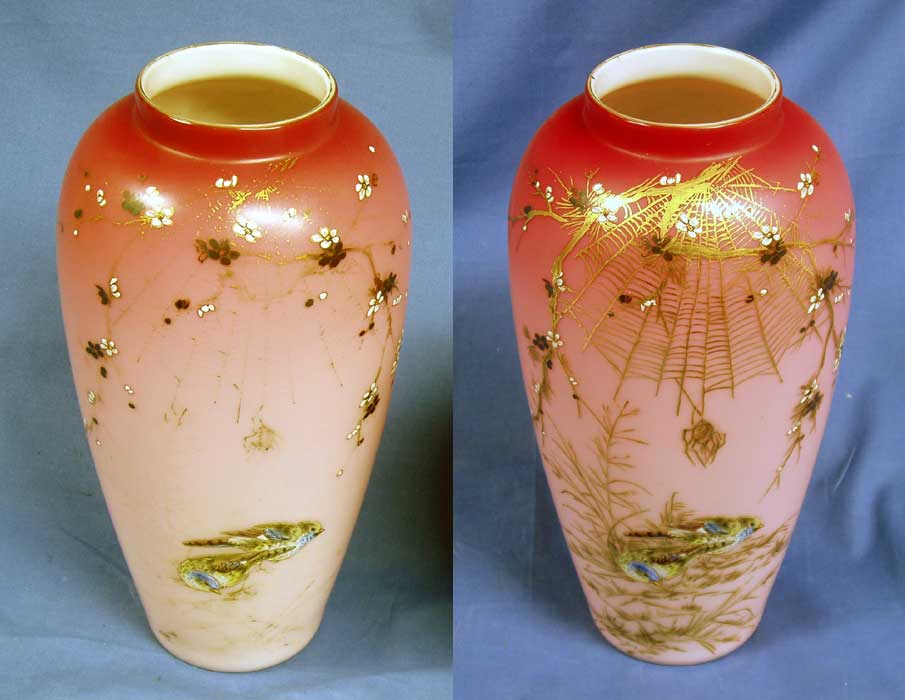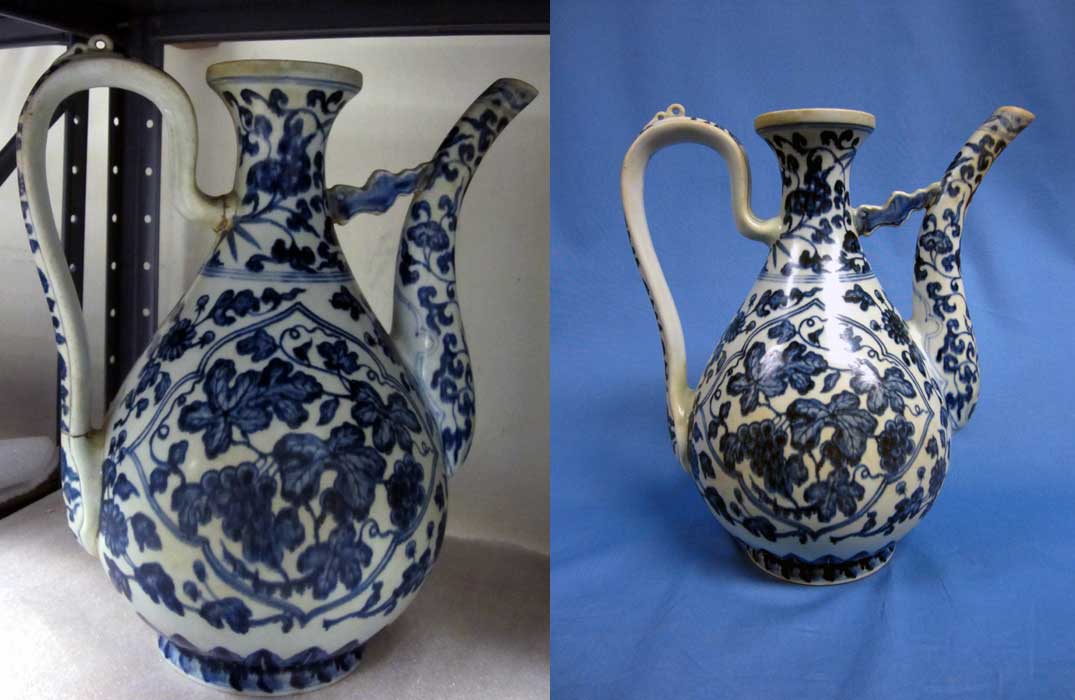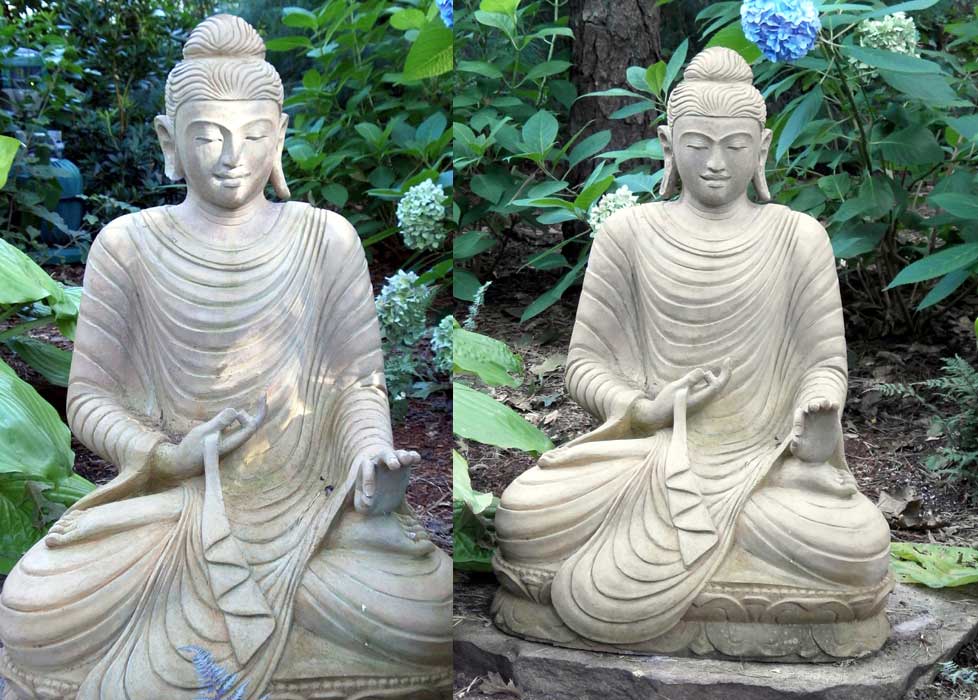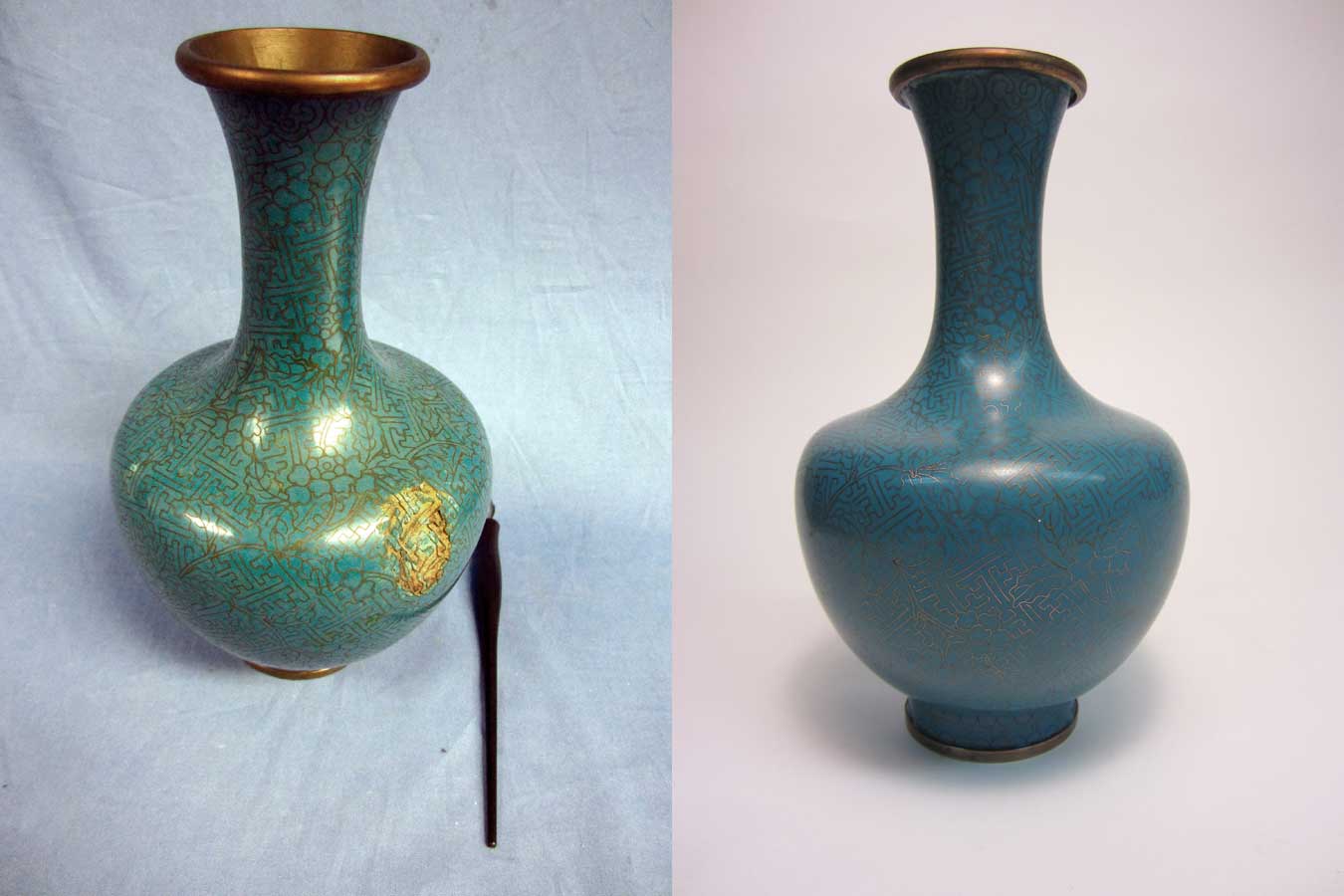
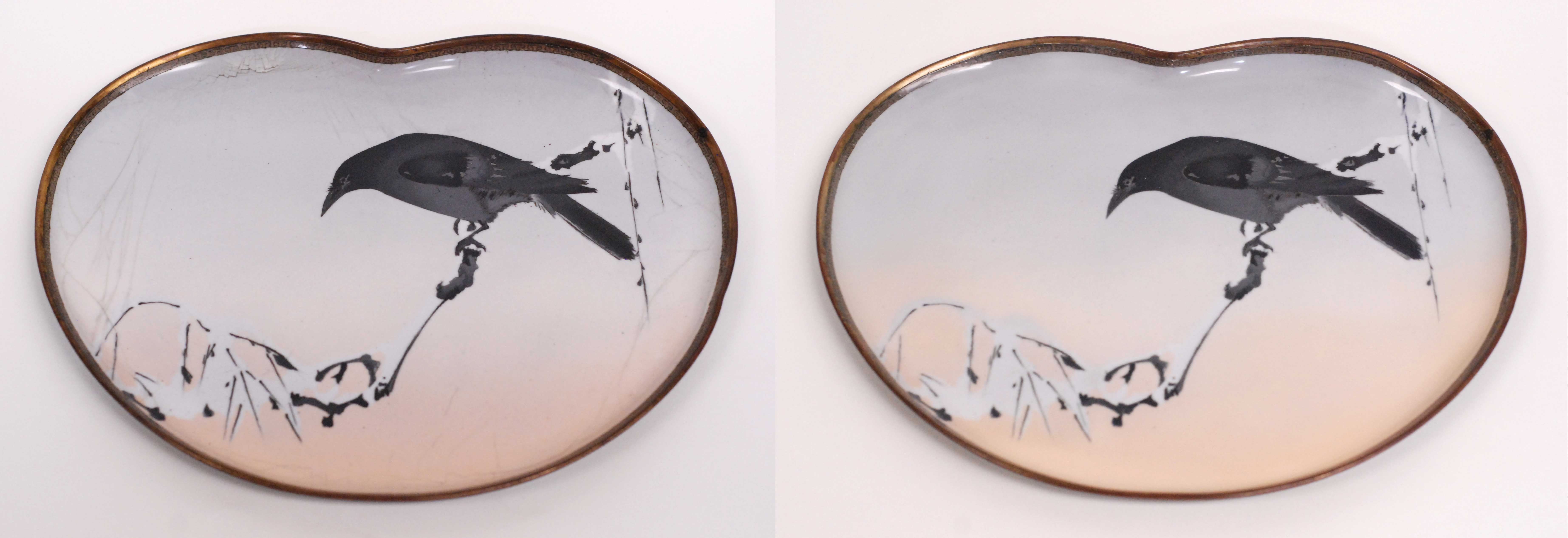
Asian Art ConservationAsian art is a very broad area. We have worked on conservation projects with sculptures from Gandhara, Tibetan masks, and Chinese Sung porcelain. A few examples of our work in Asian art conservation are shown on this page. We also have more information about our expertise in restoration of Chinese ceramics and cloisonne. It is critical to understand and be guided by good conservational practice when restoring Asian art. We also use our artistic skills to recreate missing parts and to evoke the original feeling of the piece. Often the one finger that has been broken off of a sculpture contains the essence of the gesture, and it is necessary to be an artist and understand the intent and style of the piece in order to recreate it. Japanese Kuan Yin Statue RepairChinese and Japanese art differ in an interesting way, which affects how they are restored. Chinese art ranges from the earthy to the ineffably sophisticated, but it generally accepts its natural variation and imperfection. This encourages the spontaneous living quality of Chinese art. The Japanese, in covering the same range of expression, generally hold to a degree of technical excellence that is astonishing and unrivalled. The standards of conservation vary between these two cultures. Chinese objects tolerate imperfection and the marks of age. Their objects do not have to be technically perfect, but the challenge is to work in harmony with the life of their art, the spontaneity of their brushwork, or the subtle almost organic variation of their ceramic surfaces, with names like “tea-dust” and “orange-peel.” 14th Century Chinese LohanIn restoring Japanese art, one must be prepared to blend with their ultimate fineness of craft. Filling in a missing hand of an ivory netsuke requires the same attention to detail as the original artist used in order to match it perfectly. In the same way, the chips on a lacquer writing box may seem minor, but they can require hours of careful work in order to completely disappear. This approach is applied to much of the range of Japanese art, with the exception of gold lacquer restoration. This is a unique and sensitive approach to damaged ceramics. Instead of hiding a crack or break, these Japanese ceramics are highlighted and honored with a delicate line of fine gold lacquer. We have found that the only gold adequate for such a repair is the 23K powdered gold from Japan itself that is used in the manufacture of lacquer. No one could truthfully claim to be a master of the full range of Asian art. We can say that we have seen it and appreciate its marvelous variety. Knowing these differences, we bring to each piece the appropriate conservational and artistic skill. Chinese Shibiyama Lacquer Restoration
|
||||||||||||||||||
Simplified Chinese | Traditional Chinese | Japanese | German | Arabic
|
||||||||||||||||||