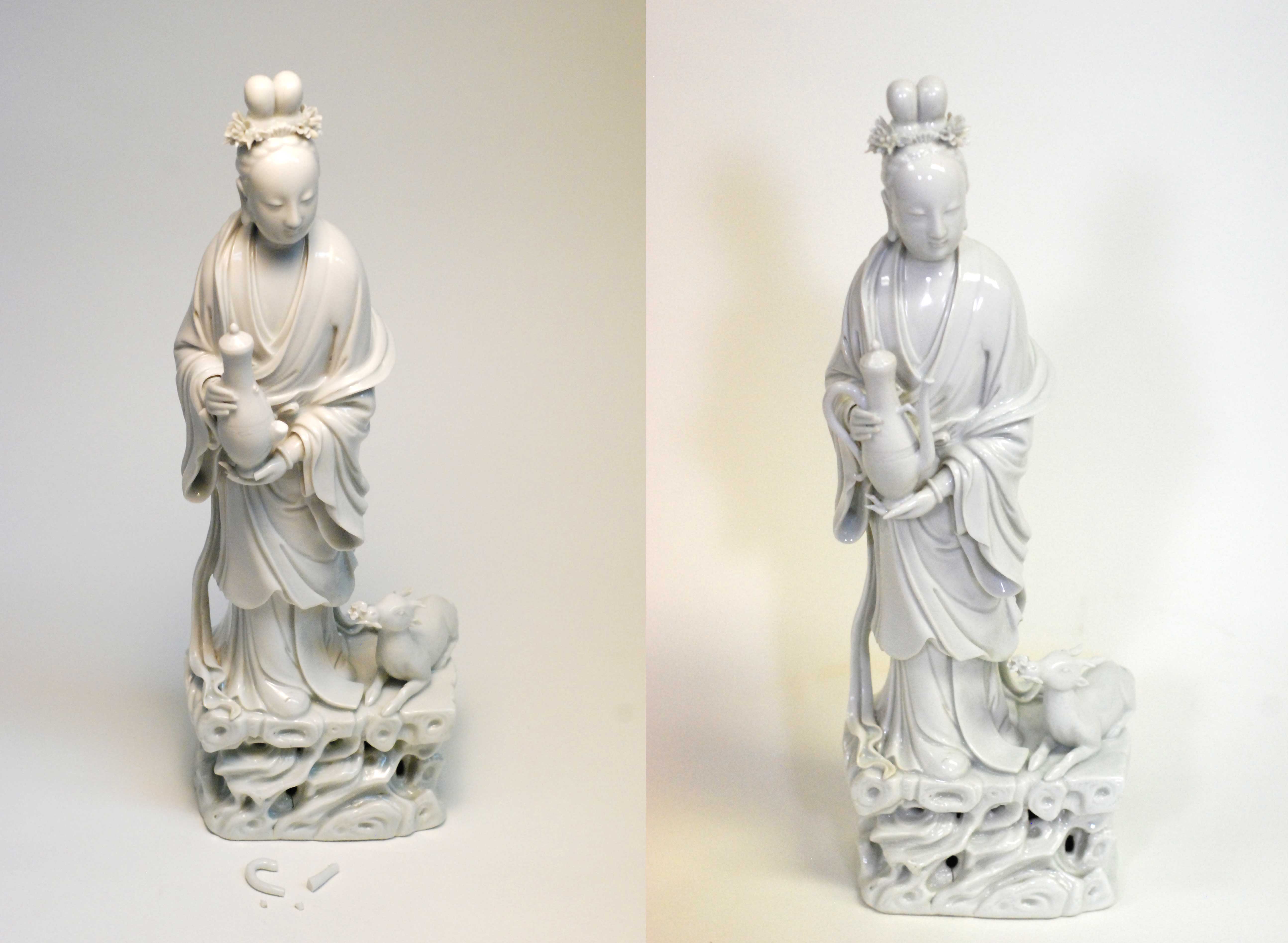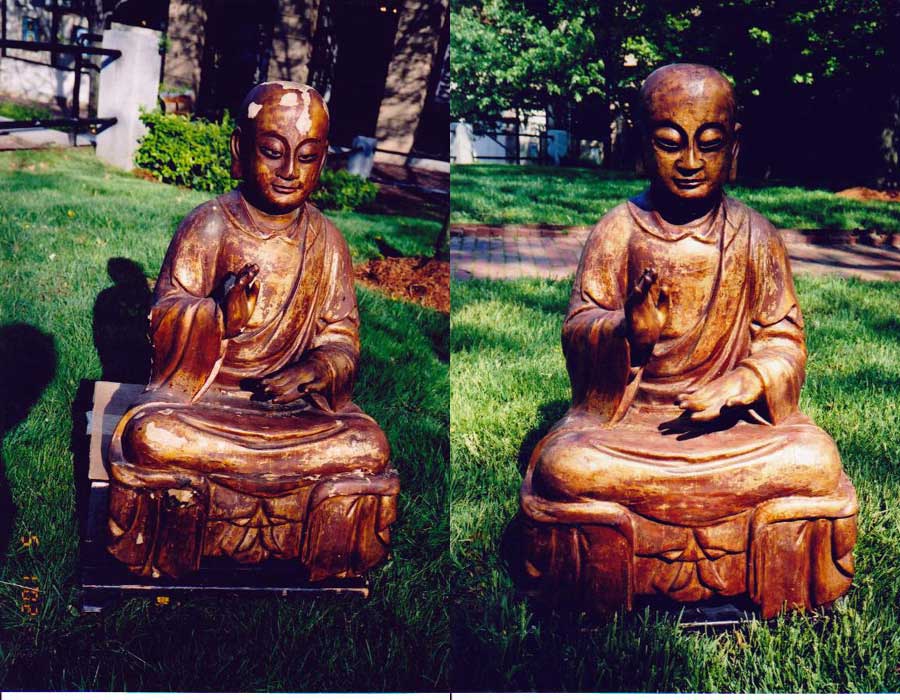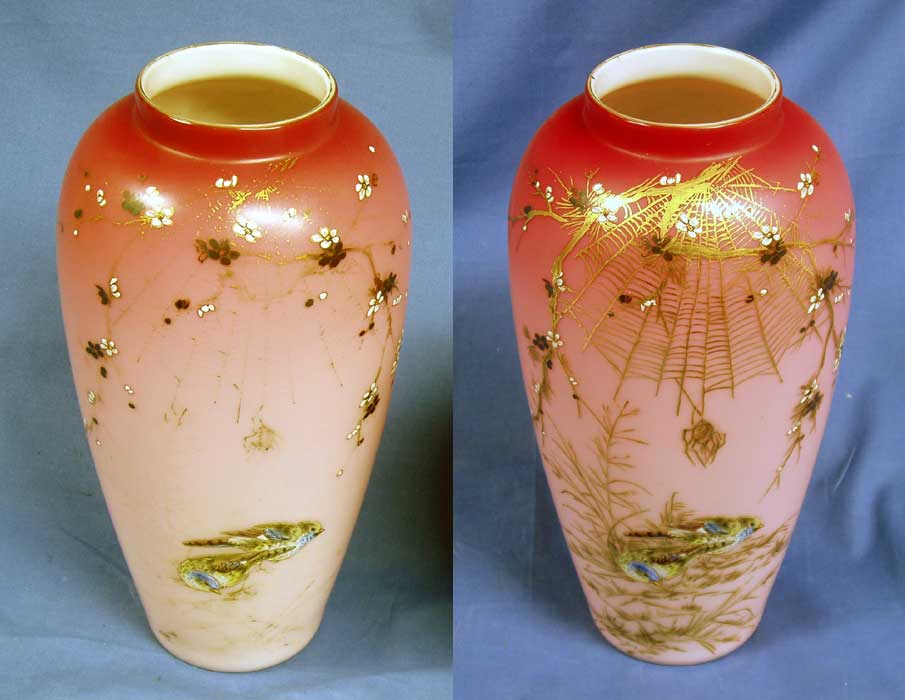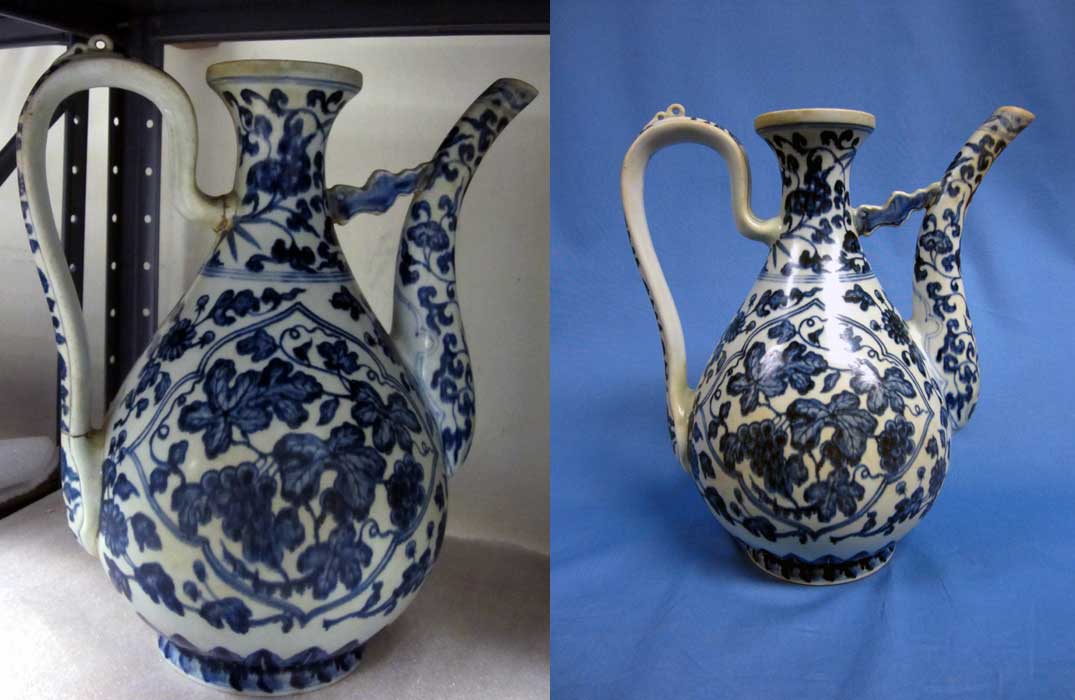
Repair and Restoration of Chinese CeramicsOver the years we have worked with many ceramics from the great range of Chinese history. We have restored wonderful Neolithic pieces, and from the early bronze age Majiayao culture. On these we use fully reversible adhesives and follow the museum practice of filling and inpainting missing areas—never painting on the original surface. The progress of ceramic art in China is legendary, and we have been honored to work with fine examples from most of its course. As the craft became ever more refined in China, different surface textures begin to be important, such as tea-dust and orange-peel. We have worked on these, as well the sancei, cobalt and iron colors underneath. The brilliant colors and fine brushwork of the Kangxi give us great pleasure to restore. We have made chips, cracks and stains disappear from the most exquisite pieces. With the Han Dynasty, we see the start of beautiful horses—which continue in various styles through the Ming Dynasty. We have dealt with the issue of repairing and strengthening their legs, as well as careful cleaning. Filling and inpainting is often sufficient to make nearly invisible repairs on the earlier unglazed pieces. Beginning with the Sui Dynasty, with its straw yellow glazes, and the later Song, we sometimes need to bring the full range of our invisible techniques to produce a fully satisfying repair. These repairs are always carefully built up on a base of B-72 acrylic to allow full reversibility. (See this restoration of a Tang dynasty horse.) Photographs are not available of the finer pieces that we have worked with —but we made most of the neck of an early Ming moon flask. In order to create the right decorative border, we needed to refer to the only other example of this piece —in the Topkapi Museum in Istanbul. Not long ago we were brought a broad, deep charger, about 45 cm. in diameter, with good Ming marks. It had a myriad of black dots all over its inner white surface. (The outside was cobalt.) There were small chips and a hairline crack, but the black dots were truly disfiguring. They resulted from bubbles in the glaze that had been exposed through long and heavy use. The bubbles had filled with black dirt, and could not be cleaned by ordinary methods. We invented a new method of cleaning, which involved gluing (with PVA) a cloth to the surface, then carefully peeling it off, along with all the dirt —and then we discovered a beautiful anwhua* dragon underneath. Because the dragon was white on white, and very subtle, it had been unnoticed among all the black dots. We restored the small chips on this wonderful piece, and reduced the hairline crack to invisibility, but the best part was putting a new surface on the inside that allowed the dragon to be as visible as it was ever meant to be. These are some highlights of our extensive work with Chinese ceramics, which is a challenging and inspiring aspect of our work at Restoration Services. * It is said that these pieces were created specially for the Emperor. The design is so subtle that only the Emperor, holding the piece in his hands, could appreciate its beauty. |
|||
Simplified Chinese | Traditional Chinese | Japanese | German | Arabic
|
|||