 |
Sculpture Repair and Conservation
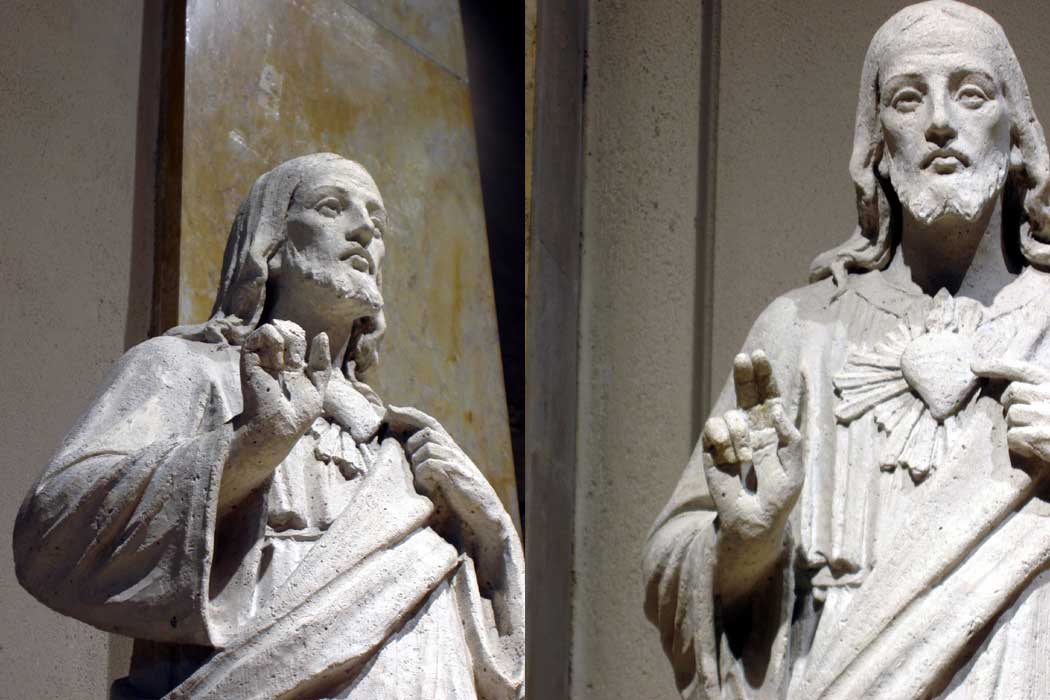
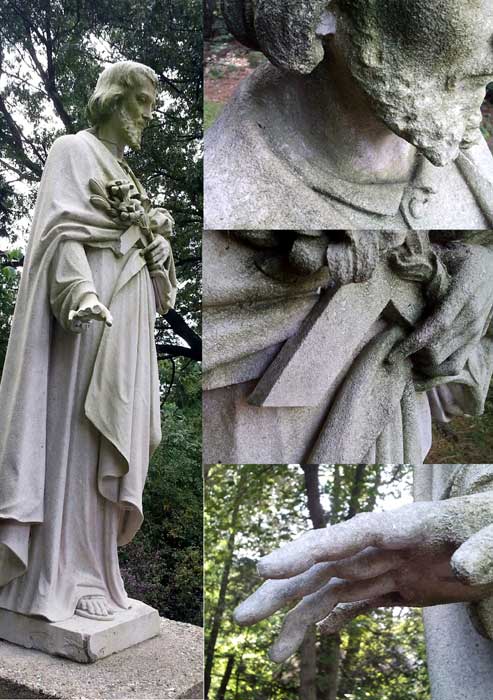
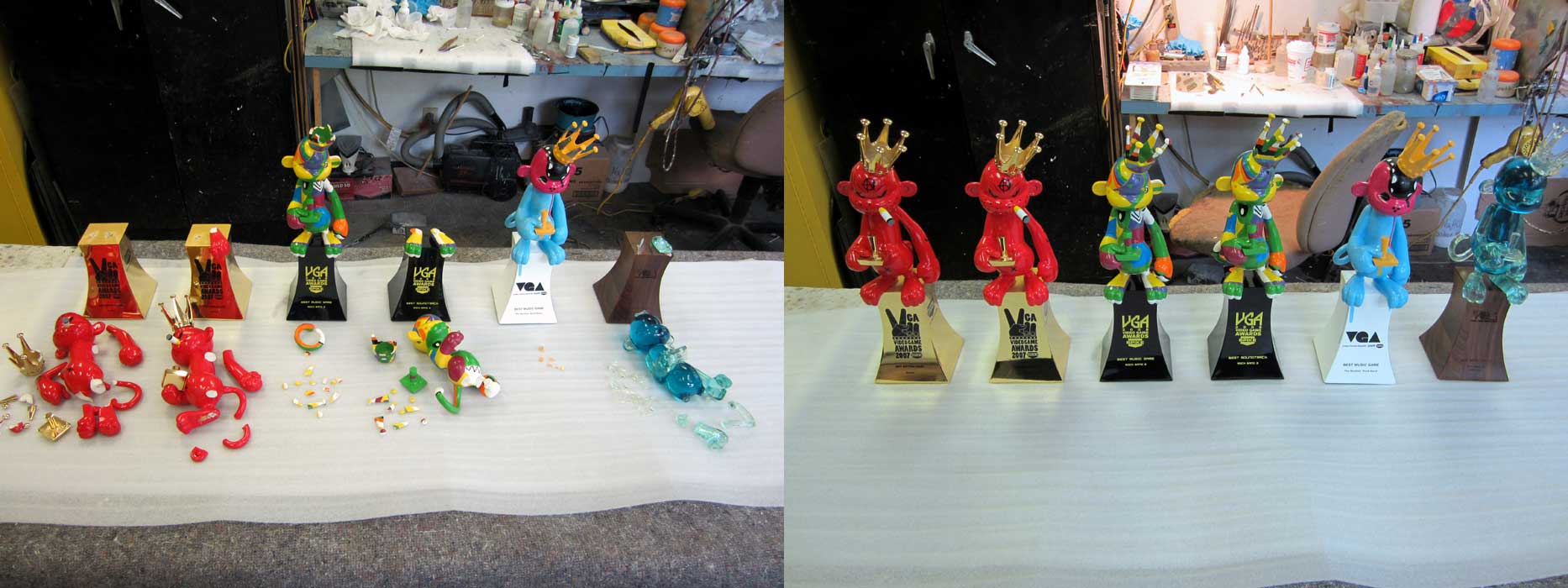
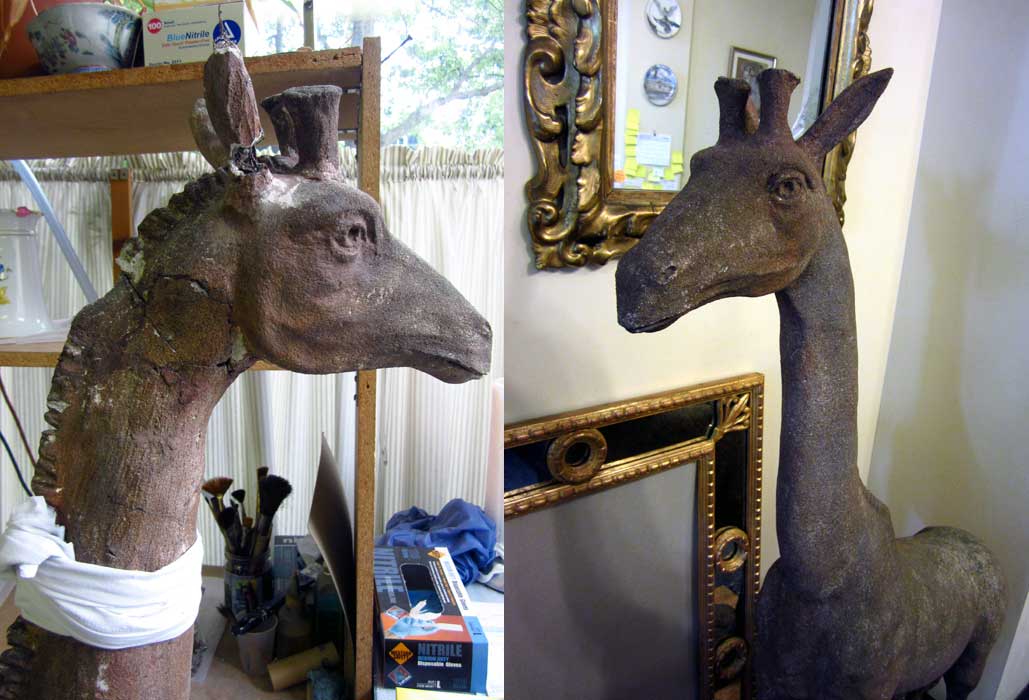
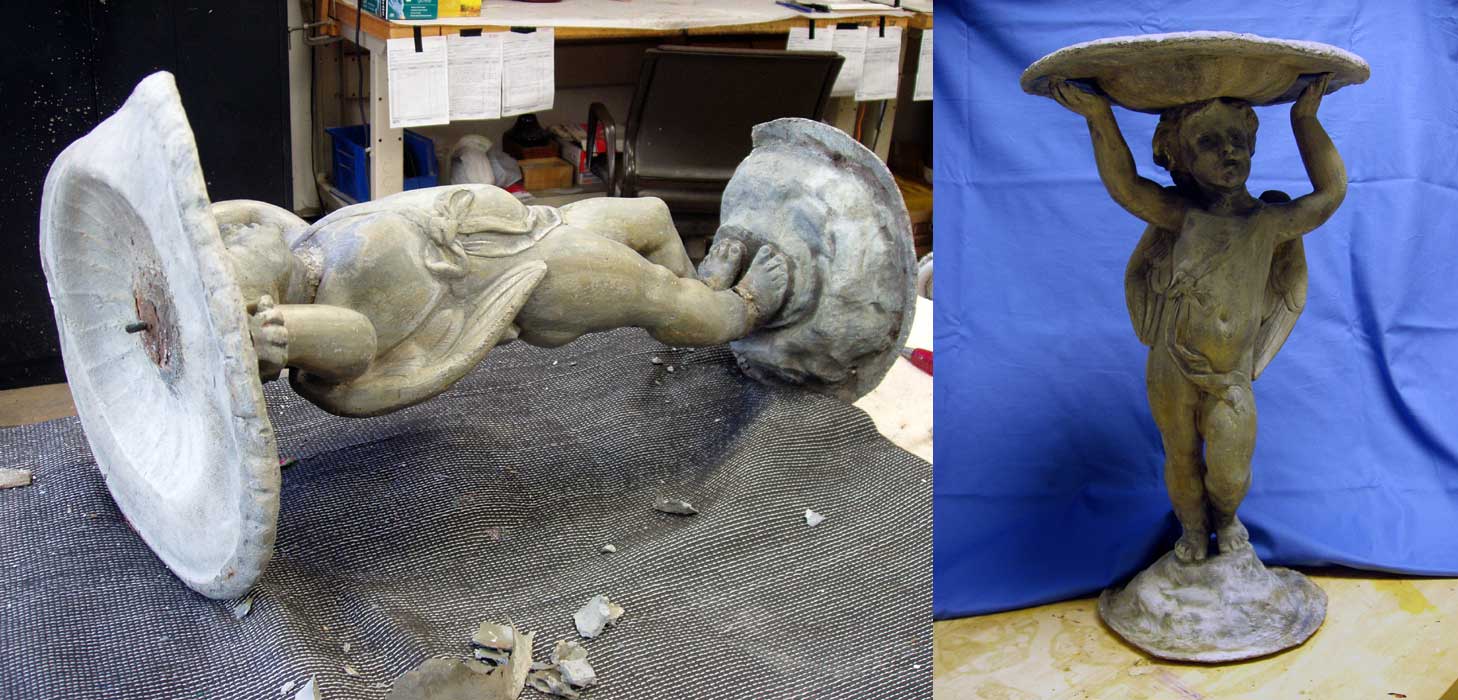
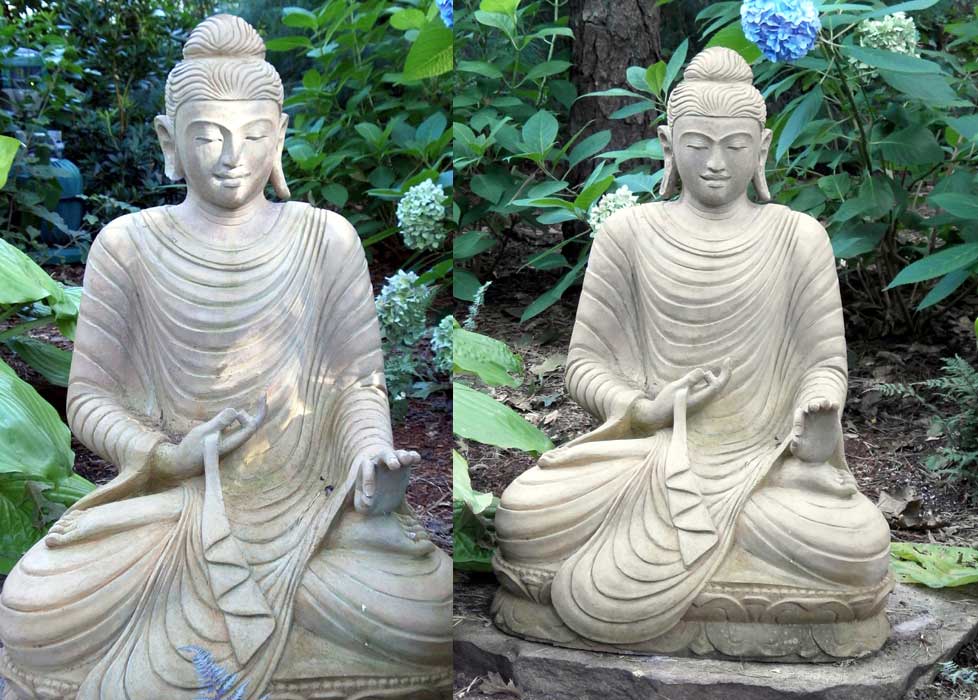
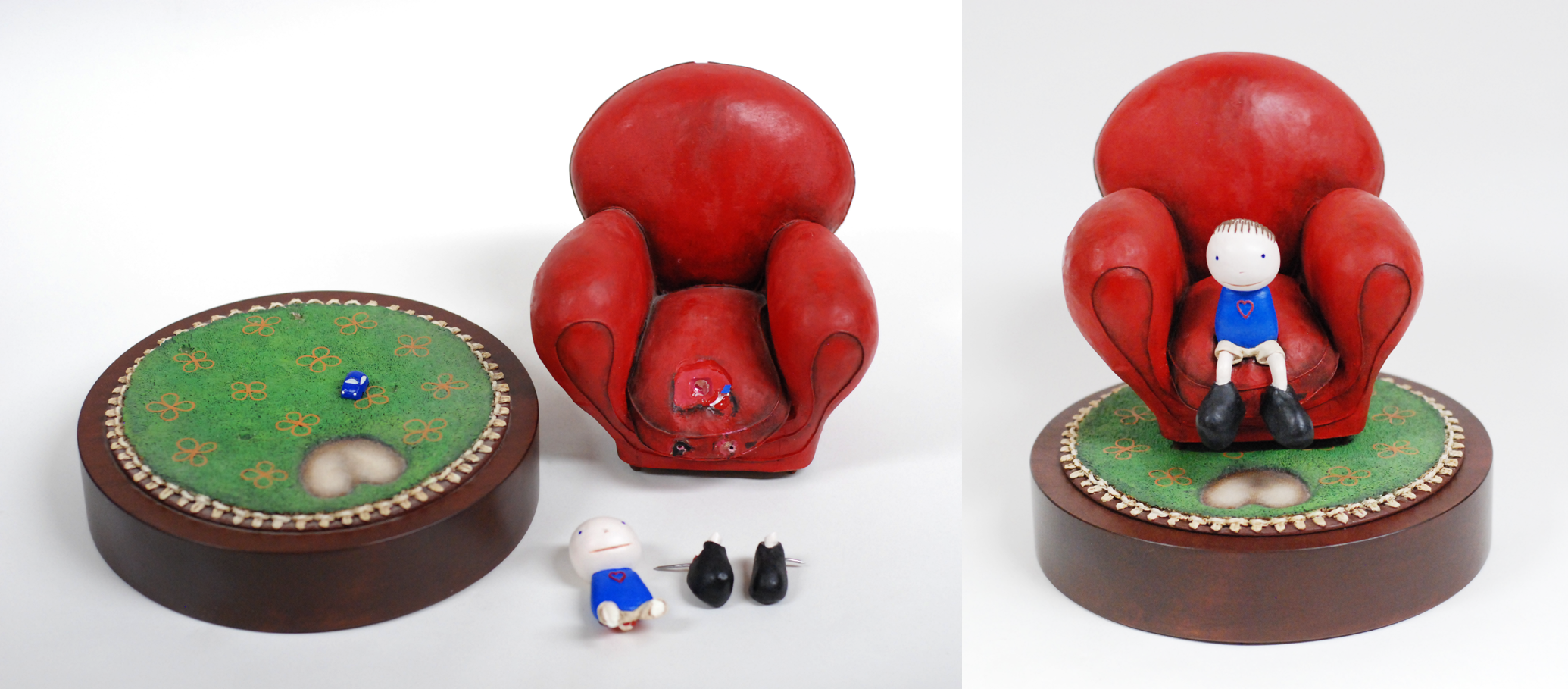
The restoration and conservation of sculpture is a large field, but there are several important general points:
- Repairs must be done in a conservationally appropriate way in order to preserve value
- An outstanding repair requires both technical skill and also considerable artistic talent
- We can say with confidence that we can restore most kinds of sculpture, from the very large to the very small
To expand on the last point, we have worked on site to restore a disfiguring crack across the midriff of a Roman matron—a life-sized, second-century marble. The work was not structurally necessary, but the crack detracted heavily from the overall impression. We did a conservationally appropriate repair that rendered the crack almost invisible.
The work on the 5 foot by 10 foot plaster bas-relief panel (below) at the University of Northern Iowa was both conservation and art. First we added a plaster and wire armature across the back to stabilize long cracks in the panel. We sealed the cracks and filled and stabilized the front surface. Then we faced an artistic challenge: the piece was boring. Although historically relevant, the University needed a compelling reason to showcase it in the foyer of their newly renovated Administration building. We approached the low relief and bland color with reversible but dramatic mica powders and dry pigments, bringing out the drama of the Civil War battle in progress by highlighting the important figures, while dropping less important areas into the background. The final result brought the original intention of the artist into a much clearer and more daring focus.
Plaster Bas-Relief Restoration
 |
 |
 |
| BEFORE (click image to view detail) |
 |
 |
 |
| AFTER (click image to view detail) |
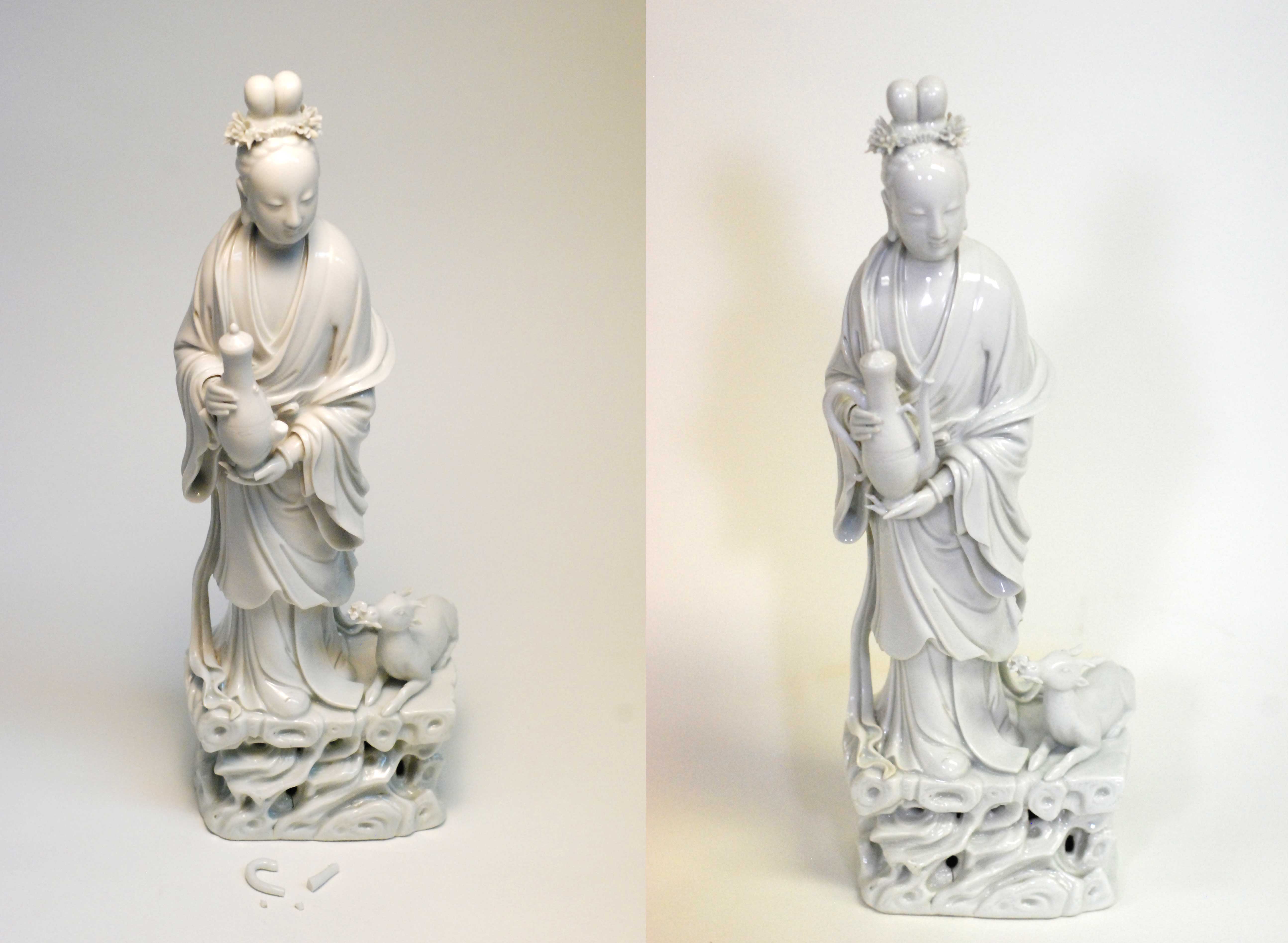
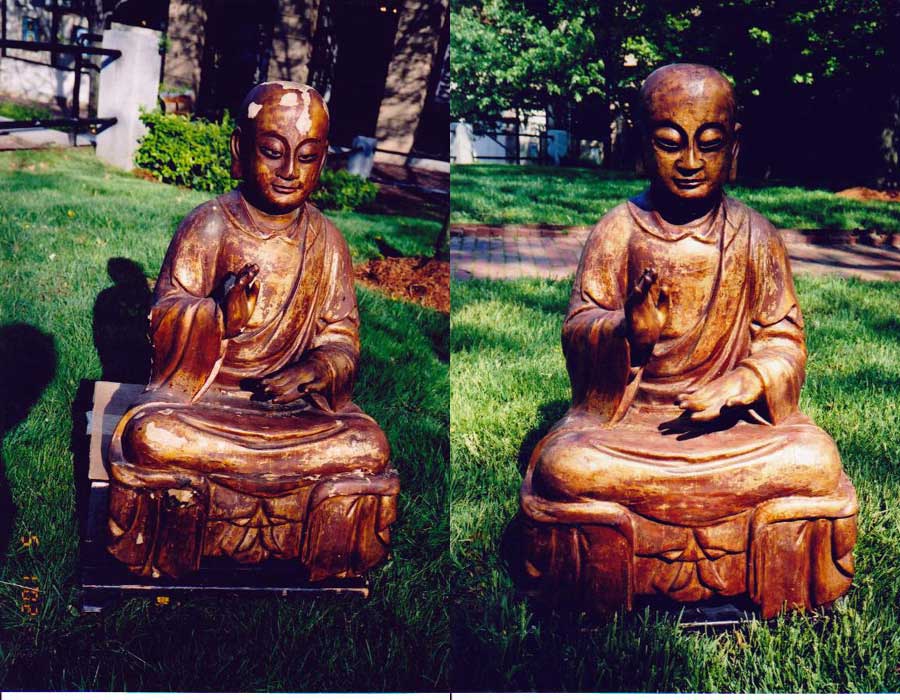
Our artistic skills are also called for when recreating missing parts of a sculpture. A missing finger or hand is often the most important part of a gesture. (See, for example, this Kuan
Yin statue restoration or the Dallin sculpture repair.) We can make hands in the Baroque style of early European porcelains, and also to match the intricate carving of a Japanese netsuke. A great deal of sensitivity, and sometimes research, is needed to re-create a missing part.
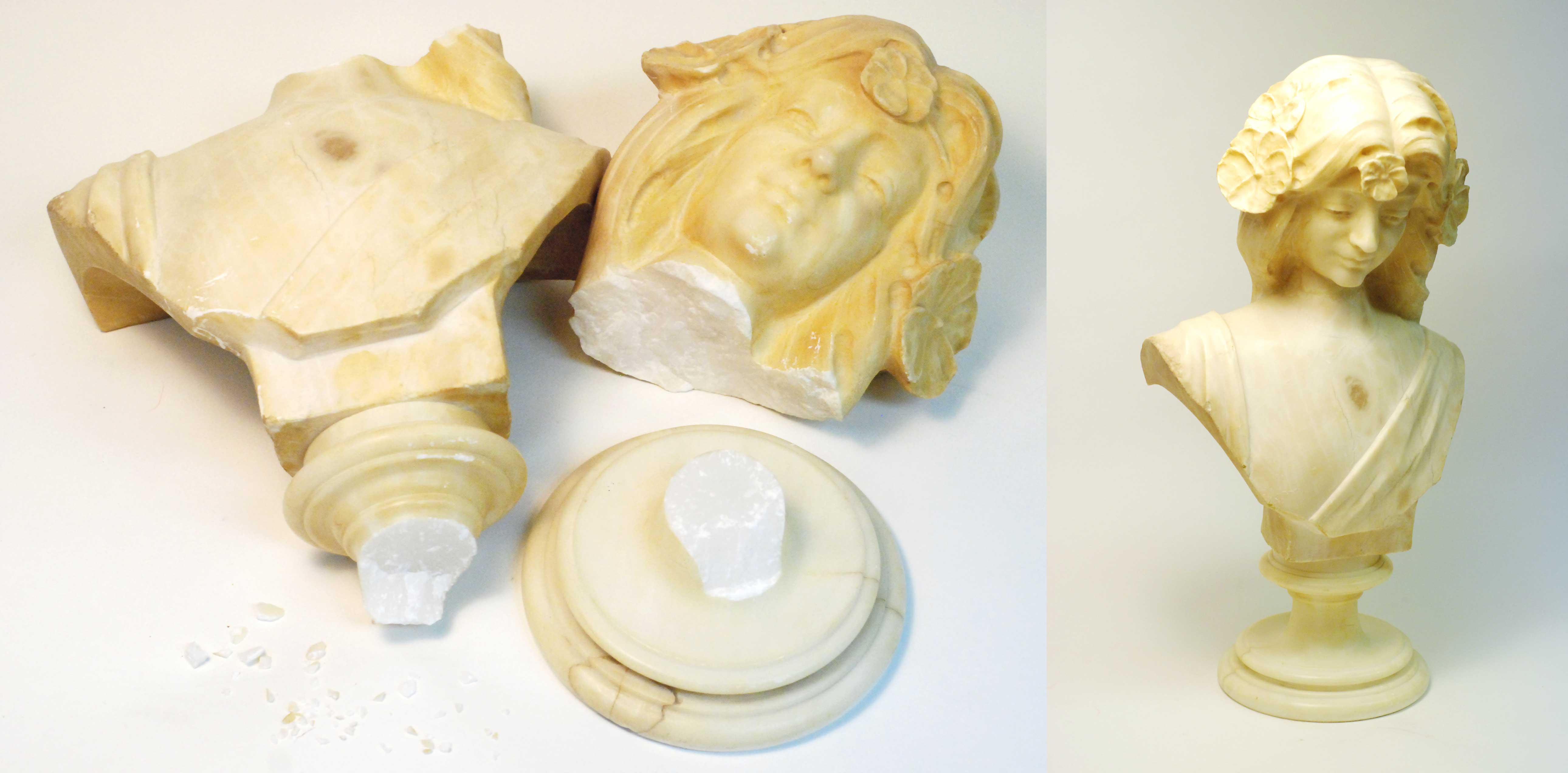
Mr. Dale has been a figurative sculptor for thirty years, working in jade and opal, and also in larger limestone and marble media. Working with the human figure and face, he brings that ability to his restoration. We have worked on precious gems, jade, bronze, ivory, alabaster and marble. The conservational aspect of our work is critical. Nothing must be done which could damage or lessen the value of a sculpture. For this reason, work on bronzes is often done cold, with epoxies and museum acrylics. Soldering and brazing are within our skills, but they are usually not the first choice because they heat up and alter the surrounding patina. While this can be corrected, it may impact the value of the piece. Our studio is a good choice when the value of a piece is important. Our first concern is conservational. We also excel and delight in the artistic challenges of sculptural recreation.
 |
 |
 |
 |
 |
 |
 |
 |
 |
| |
BEFORE (click for larger image) |
|
DETAIL (click for larger image) |
|
DETAIL (click for larger image) |
|
AFTER (click for larger image) |
|
| |
It is sometimes difficult to balance the wishes of the client with appropriate sculpture conservation. Our customer wanted a real brass replacement on an Indonesian ceremonial staff finial, and he asked us to make it in the precise style of these objects. A strong joint was needed to support the weight of the brass head, but it would have been inappropriate to solder the new head on because it would have severely damaged the old patina on the sculpture. There was, however, a hole in the original casting at the neck, which afforded a large enough hole to glue it. Working from several books on the subject, Nelson carved a wax head of the right size and features using his skills as a figural sculptor. We then had it cast in bright brass, leaving a long stump on the bottom which would fit securely into the existing hole. The new piece was then solidly attached. In this case an epoxy was called for because, unlike the museum environment, the demands of the owner's house suggested it needed to be strong. On metal objects, epoxies are reversible. The head was then painted and aged with chemicals and acrylics to match the body of the piece. |
|
Statue Repair: Tang Dynasty Horse
 |
 |
 |
 |
 |
| |
BEFORE (click for larger image) |
|
AFTER (click for larger image) |
|
| |
This is a Tang Dynasty horse, one of many
beautiful horses to come from China in the
last century. There are many fakes being produced
now, and we do sampling for a thermo-luminescent
testing lab called Oxford Labs. This process is the only way that
most of these wonderful artifacts can be authenticated.
Provenance is also very useful in dating,
as in this case the horse came from a family
that probably brought it into the U.S. around
the end of the nineteenth century.
Most of these horses were made to go into
graves, and hence there was no thought given
to durability. Because of this, many Chinese
horses and camels have broken legs, ears,
and tails. In the case of this horse, the
legs had been broken and mended so often that
many pieces were actually missing. Thus, an
originally weak structure had become completely
unstable and required the unusual measure
of drilling through the pieces with a diamond
drill and anchoring them all together with
the sturdy wires that you can see in the photograph.
After that, the whole area could be filled and
inpainted with some assurance that normal
care would not break it again. (Conservation for a museum requires
that any painting-to-match be done within the areas of new filling only
and not cover any original material. This is called "inpainting.")
The home environment
is much more rigorous than a museum, and frequently
repairs and adhesives are called for which
are not usually used in museums, although
they are reversible. Nonetheless, in a case
such as this, we think the extreme measures
are justified by the result of this antique restoration. |
|
|
 |